|
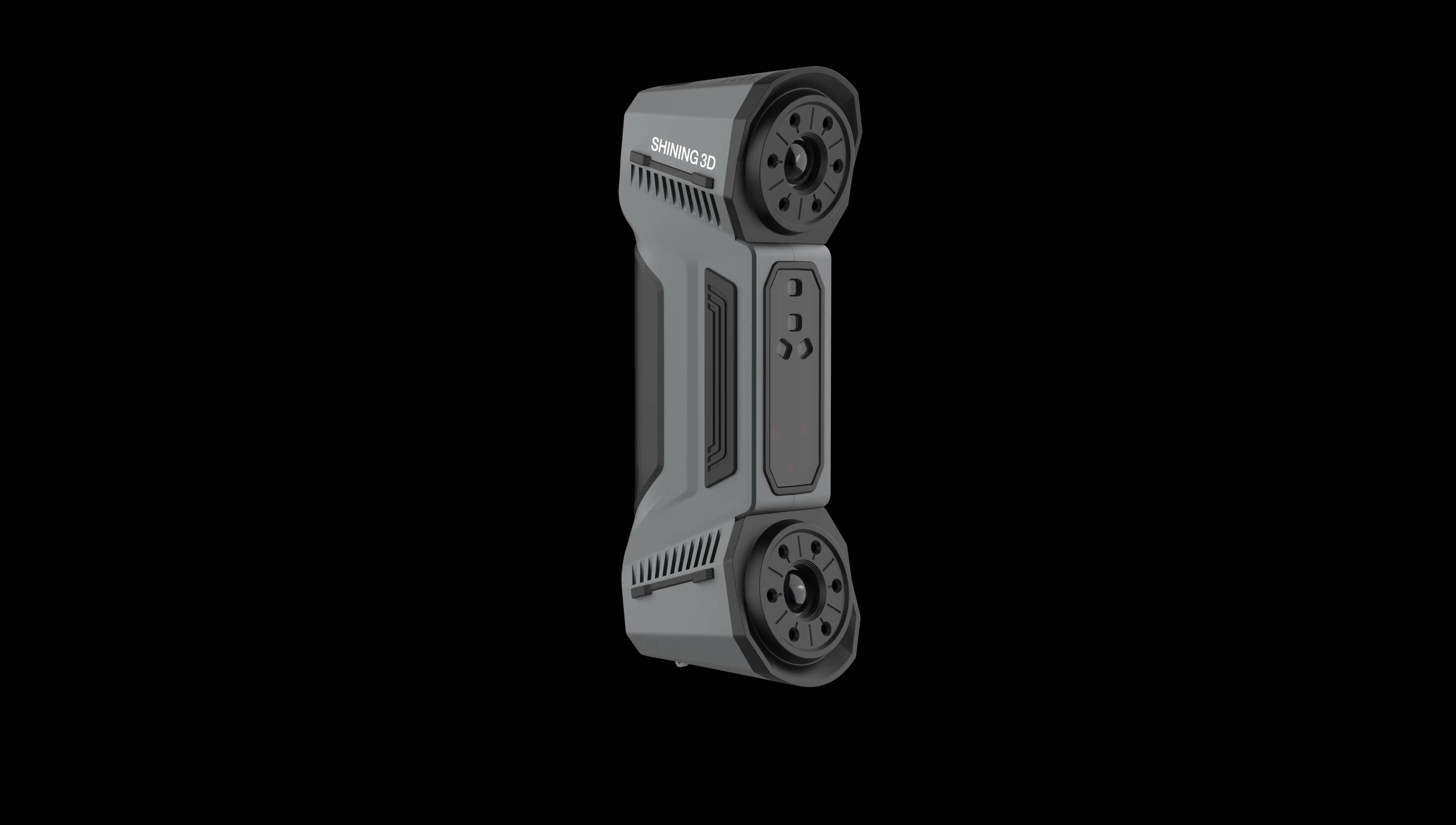
FreeScan UE Pro2 |
||
|
Modes de numérisation |
Mode de numérisation haute vitesse |
50 lignes laser |
|
Mode de numérisation précis |
7 lignes laser parallèles |
|
|
Mode de balayage des trous profonds |
1 ligne laser |
|
|
Mode photogrammétrique |
Photogrammétrie binoculaire intégrée |
|
|
Précision de numérisation |
0,02 mm |
|
|
Précision volumétrique |
0,015 mm + 0,03 mm/m ( Avec photogrammétrie intégrée 0,02 mm + 0,015 mm /m ) |
|
|
Distance entre les points |
0,01 mm - 10 mm (réglable) |
|
|
Vitesse de numérisation |
3,46 0,000 points/s |
|
|
Champ de vision maximal |
6 00 mm × 55 0 mm |
|
|
Distance de travail |
300 mm ( mode de balayage haute vitesse / trous profonds ) ; 200 mm ( mode de balayage précis ) |
|
|
Profondeur de balayage |
550 mm |
|
|
Classe laser |
Classe II (sans danger pour les yeux) |
|
|
Dimensions |
306 mm × 119 mm × 101 mm |
|
|
Poids |
9 5 0 g |
|
|
Alimentation électrique |
24 V , 3,75 A |
|
|
Plage de température de fonctionnement / Plage d'humidité |
-20 ° C ~ 40 ° C , 10 % HR ~ 90 % HR |
|
|
Méthode de connexion |
Les connexions sans fil et filaires peuvent être commutées librement (les vitesses de numérisation sont identiques dans les deux cas). |
|
|
Méthode de transmission filaire |
USB 3.0 |
|
|
Méthode de transmission sans fil |
Wi-Fi 6/802.11a/b/g/n/ac |
|
|
Batterie externe standard |
La batterie externe doit être compatible avec le protocole PD (interface USB Type-C) et avoir une puissance de sortie de 100 W. |
|
|
Configuration informatique recommandée |
Système : Windows 10 et versions ultérieures (Édition Professionnelle), 64 bits ; Carte graphique : série NVIDIA, RTX 4060 et versions ultérieures (RTX 4090 et versions ultérieures recommandées) ; Mémoire vidéo : ≥ 8 Go (≥ 16 Go recommandés) ; Processeur : Intel i7-13700H ou supérieur ; RAM : ≥ 64 Go |
|
Adapté aux mesures industrielles dans divers contextes
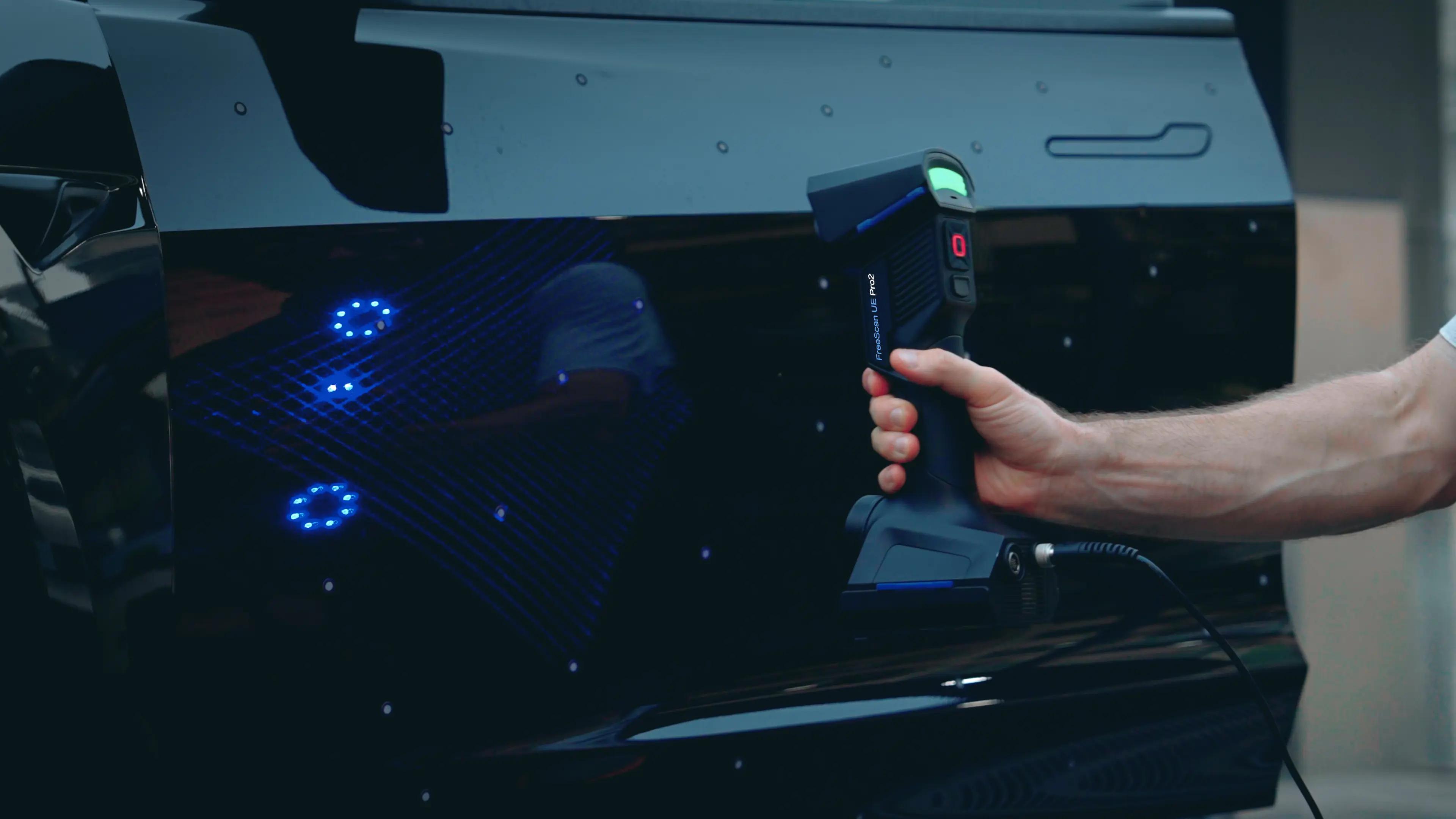
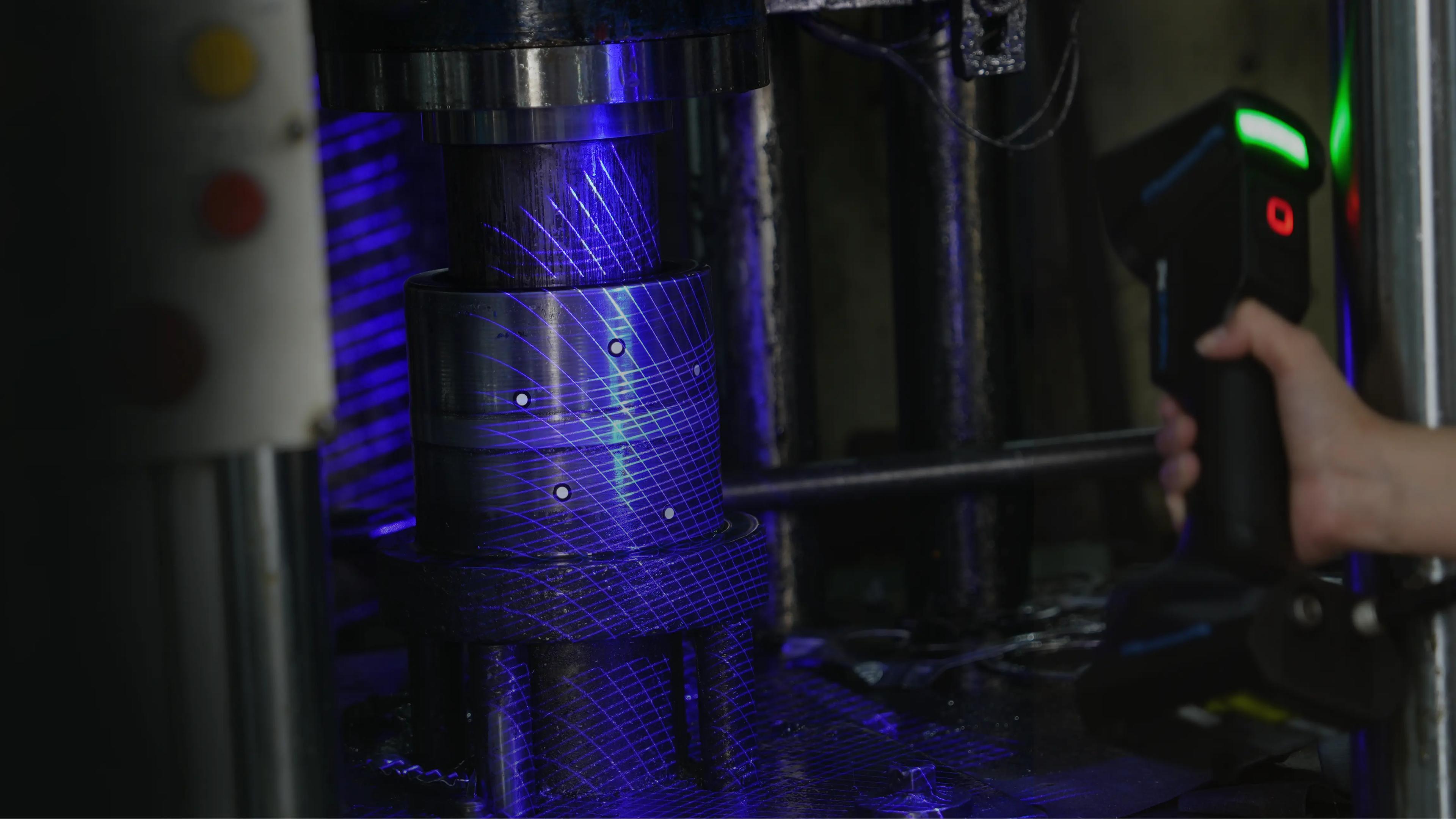
50 faisceaux laser bleus convergents, associés à un balayage de grille en temps réel, pour une vitesse de balayage rapide et une efficacité élevée.
Adapté à la mesure des dommages structurels industriels et au développement et à la réparation de composants de grande taille.
Associé à un module informatique embarqué, il permet la numérisation et la mesure sans fil de pièces de grande taille.
Léger, assurant une mesure à long terme sans contrainte
Convient pour la mesure de pièces en tôle (surfaces de formes spéciales) et de grandes pièces moulées.
Fonctionne dans une plage de températures de -20 °C à 40 °C, assurant ainsi une large gamme d'applications.
Applications
Industrie automobile
Inspection dimensionnelle 3D de pièces automobiles, inspection 3D de moules automobiles
Aviation civile
Inspection complète des aubes du moteur, contrôle qualité des composants, assemblage et intégration
Machines de construction
Inspection de la déformation des essieux de camions miniers, inspection de la déformation des carters de réducteurs, développement de nouveaux produits à partir de composants de grande taille
Énergie et industrie lourde
Inspection des moules de production, inspection des produits finis (arbres principaux d'éoliennes), inspection 3D des moyeux d'éoliennes : cas d'application
Cas de candidature
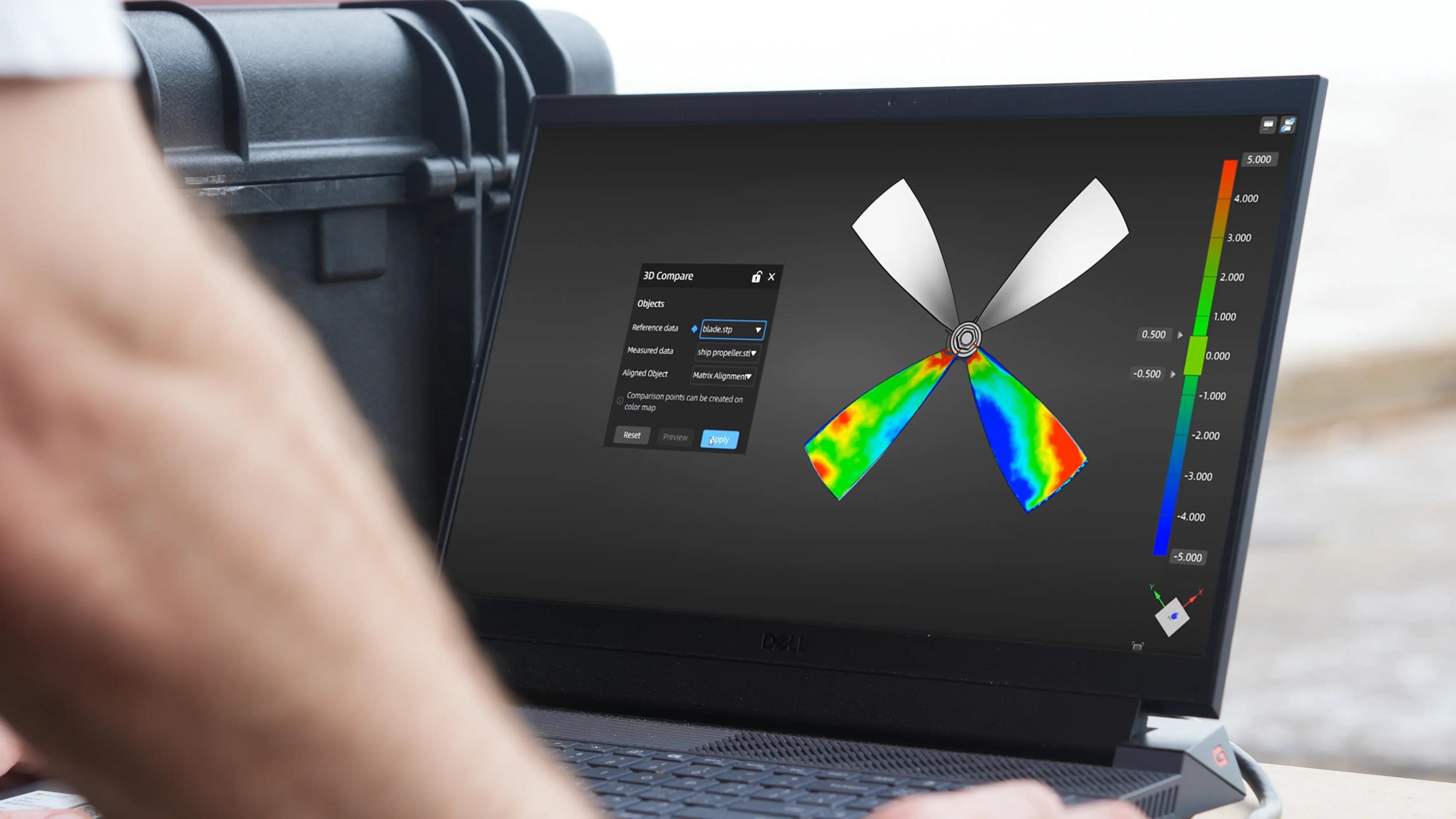
Points forts
Conception légère, numérisation sans fil.
Cet appareil léger (950 g) intègre des modules informatiques embarqués innovants pour la transmission sans fil. L'utilisation d'une batterie externe permet la numérisation sans fil. (La batterie externe doit être compatible avec le protocole PD (interface USB Type-C) et avoir une puissance de sortie de 100 W.)
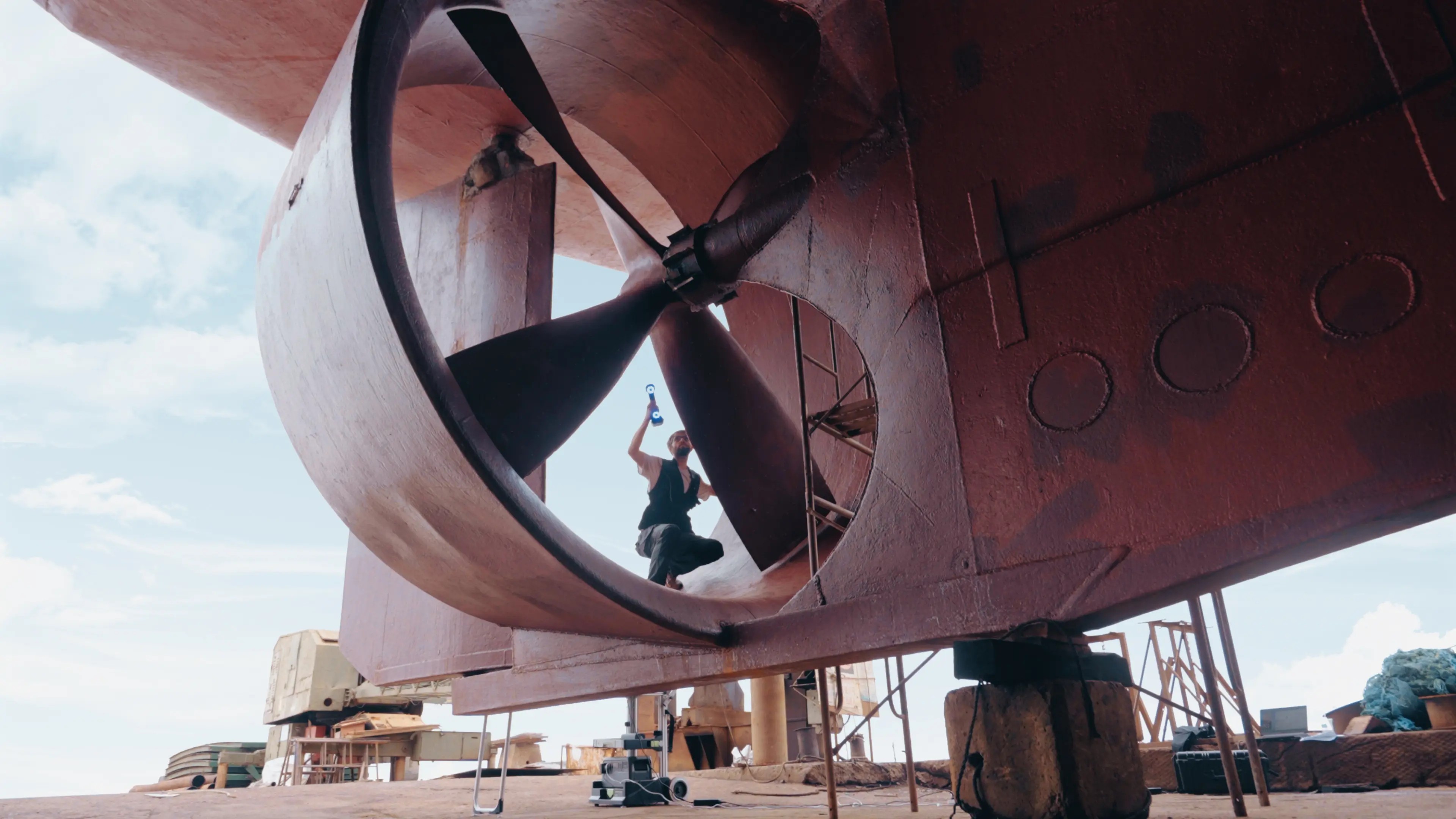
Axé sur la précision, respect des exigences.
Avec une précision de 0,02 mm et une répétabilité stable, il répond aux exigences de mesure 3D de l'industrie manufacturière.
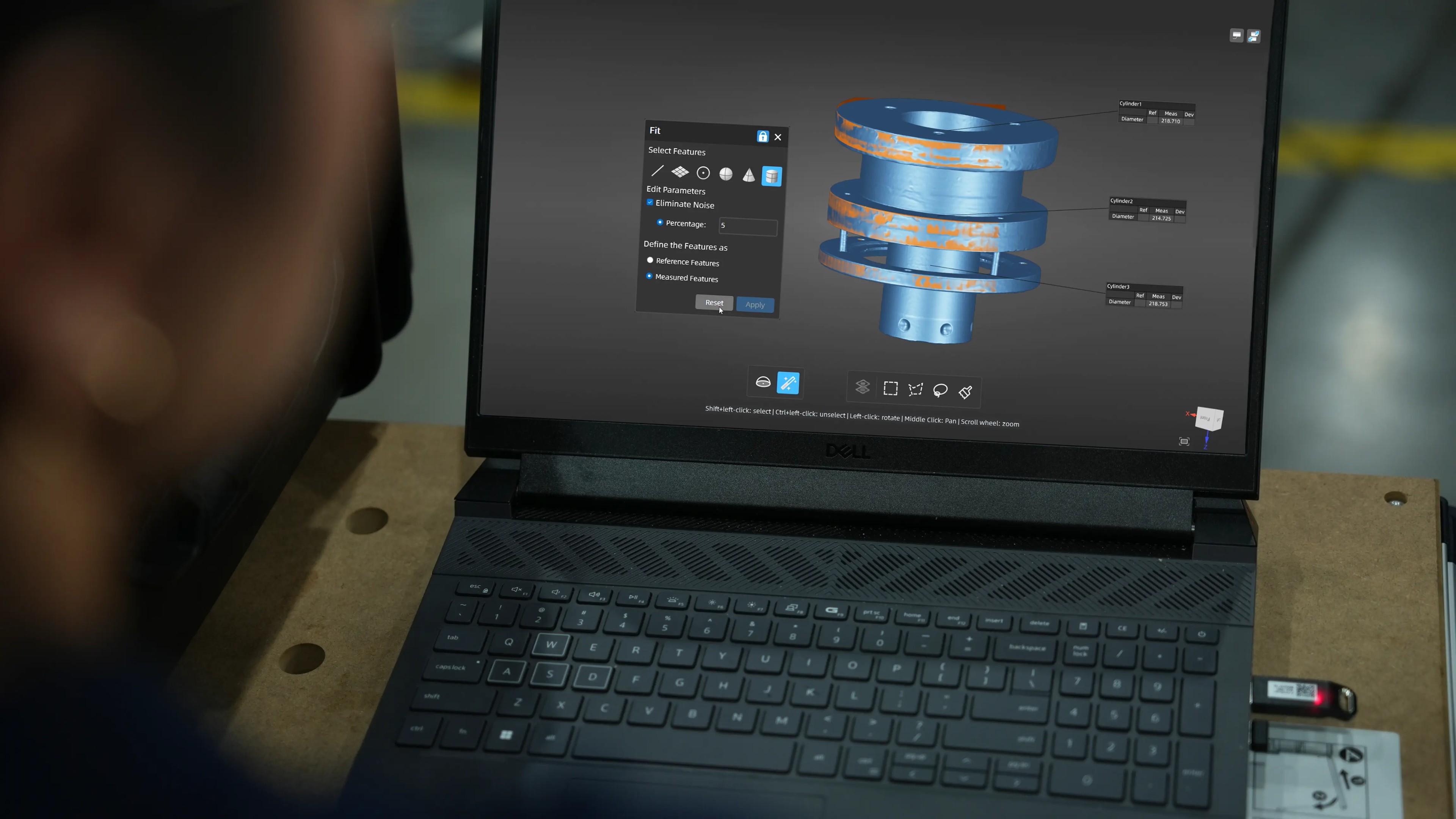
La photogrammétrie ne nécessite aucune cible codée.
La photogrammétrie élimine le besoin de points codés, garantissant une acquisition de données précise pour les objets de grande taille. (Combinée à la photogrammétrie, la précision volumétrique atteint jusqu'à 0,02 mm + 0,015 mm/m.)
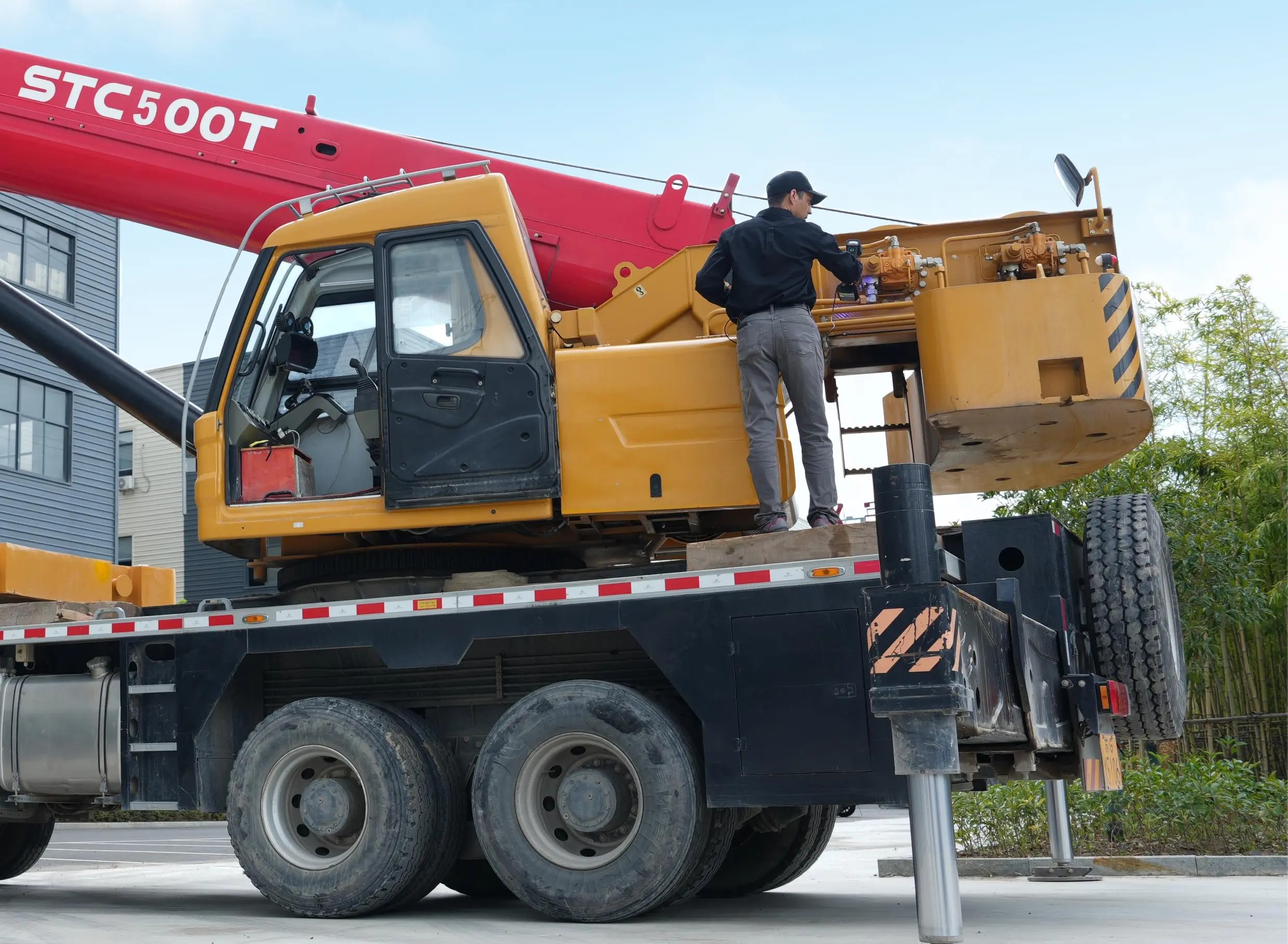
Numérisation haute performance, priorité à l'efficacité.
Un total de 58 faisceaux laser améliorent considérablement l'efficacité et permettent un balayage rapide à des vitesses allant jusqu'à 3 460 000 points/s.
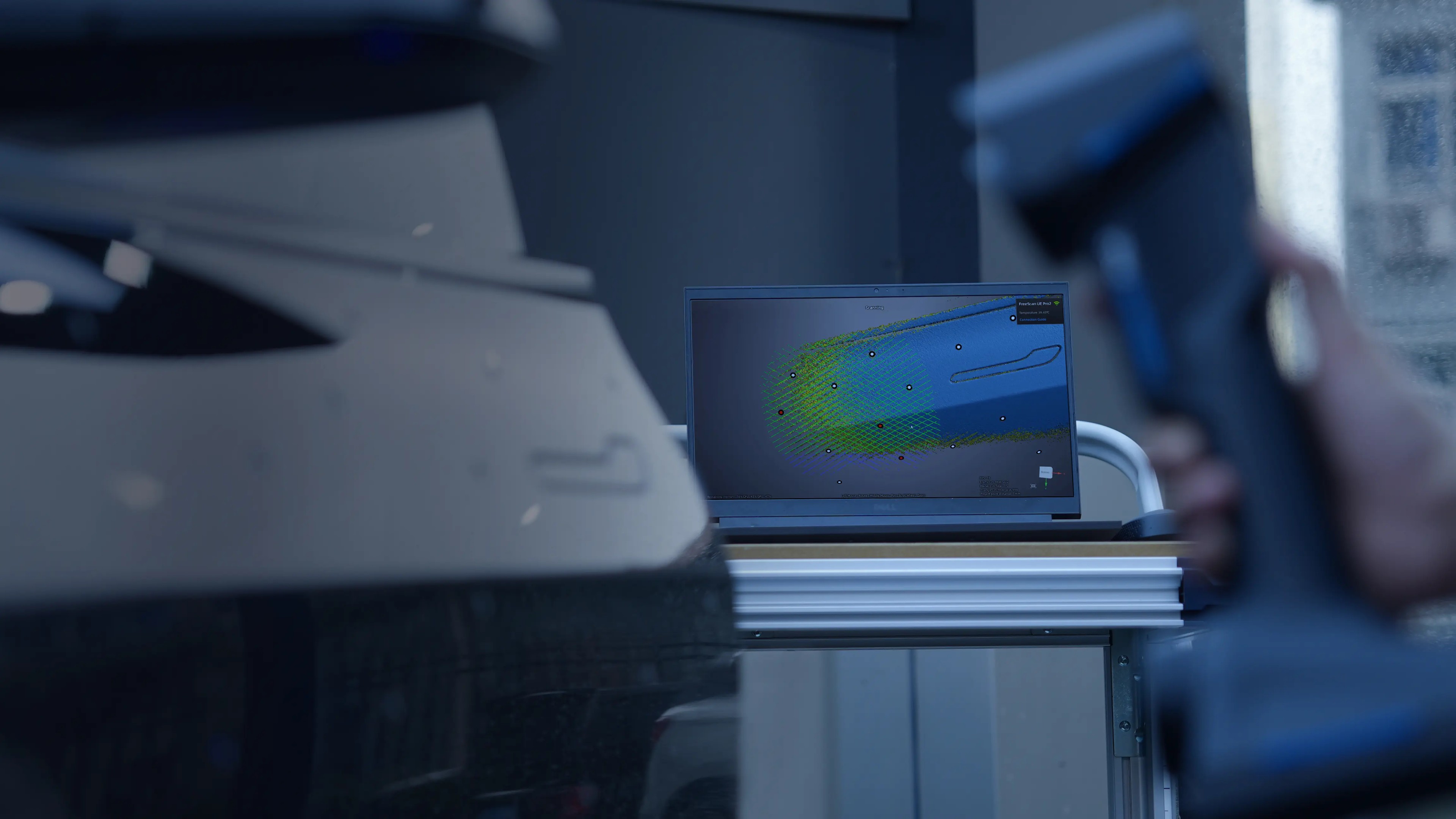
Maillage en temps réel pour une haute fidélité.
Améliore l'efficacité globale.
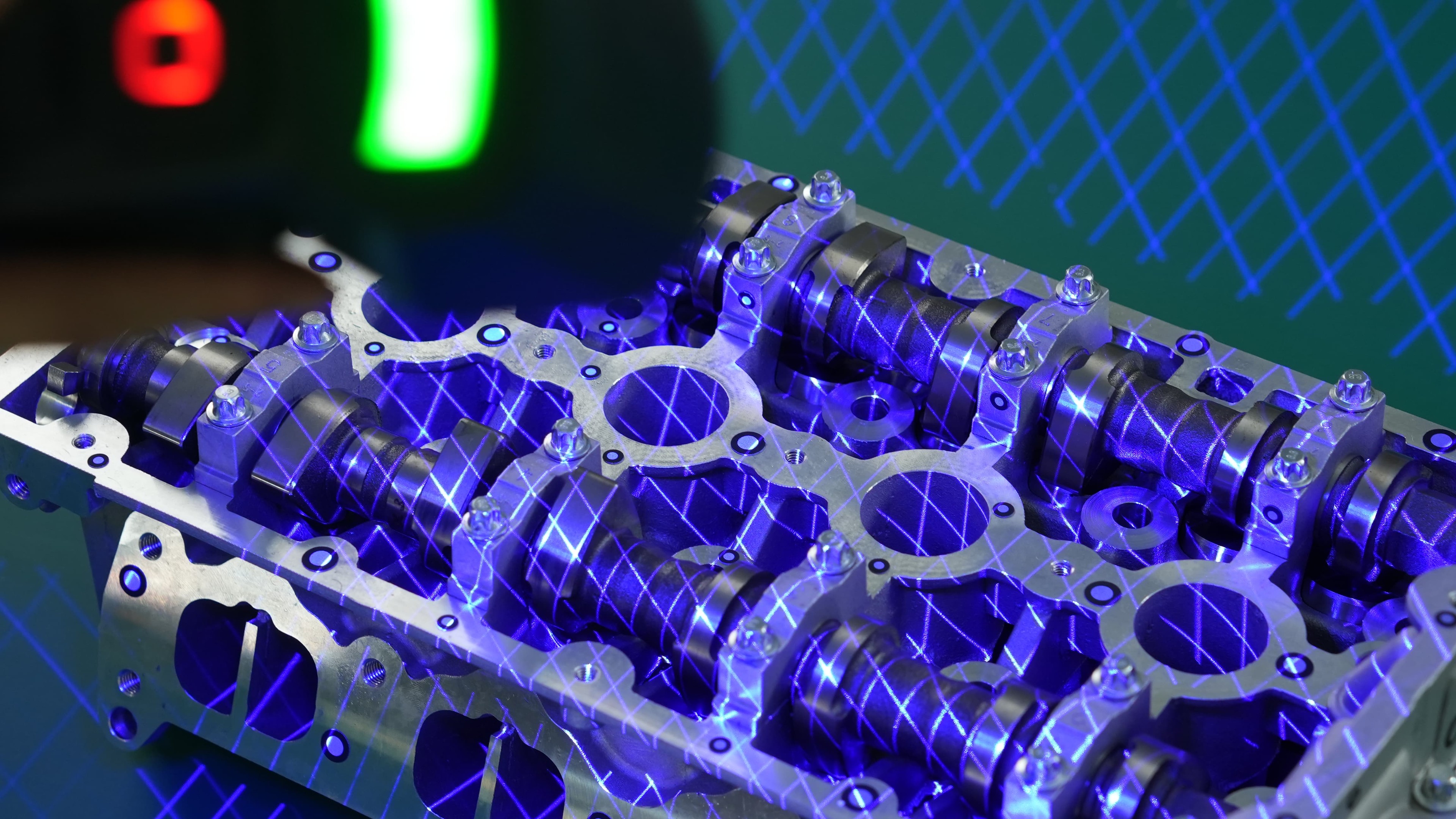
Quatre modes de mesure, une machine pour de multiples usages.
50 faisceaux laser bleus entrecroisés pour une numérisation rapide des données globales ; 7 faisceaux laser bleus parallèles pour une numérisation précise des détails locaux ; 1 faisceau laser bleu unique pour l’acquisition de données stéréoscopiques en profondeur ; module de photogrammétrie binoculaire pour une précision globale de la cible.
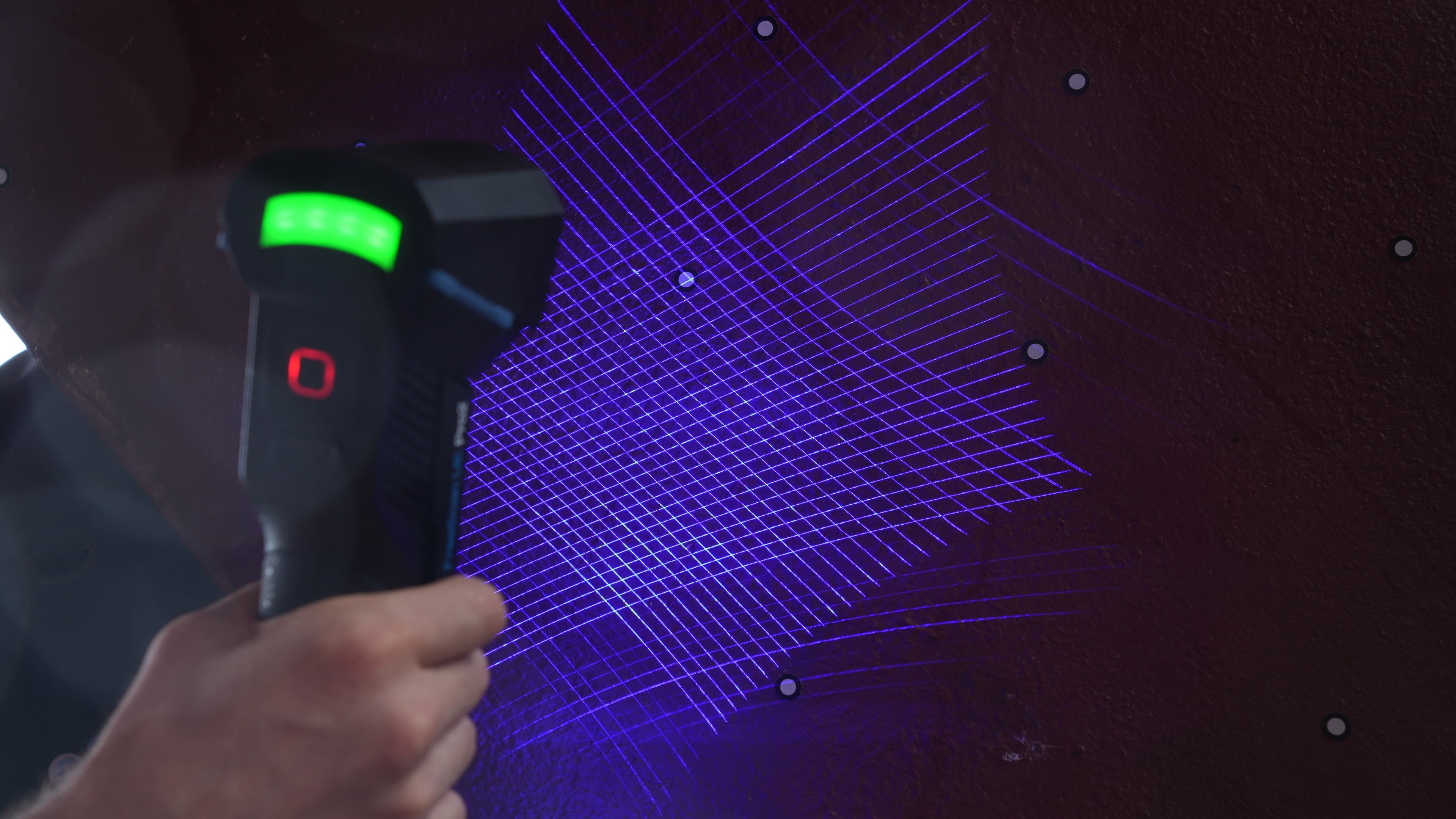
Compatibilité étendue avec les matériaux.
Le laser bleu est compatible avec une large gamme de matériaux, permettant une numérisation aisée de pièces noires et hautement réfléchissantes.
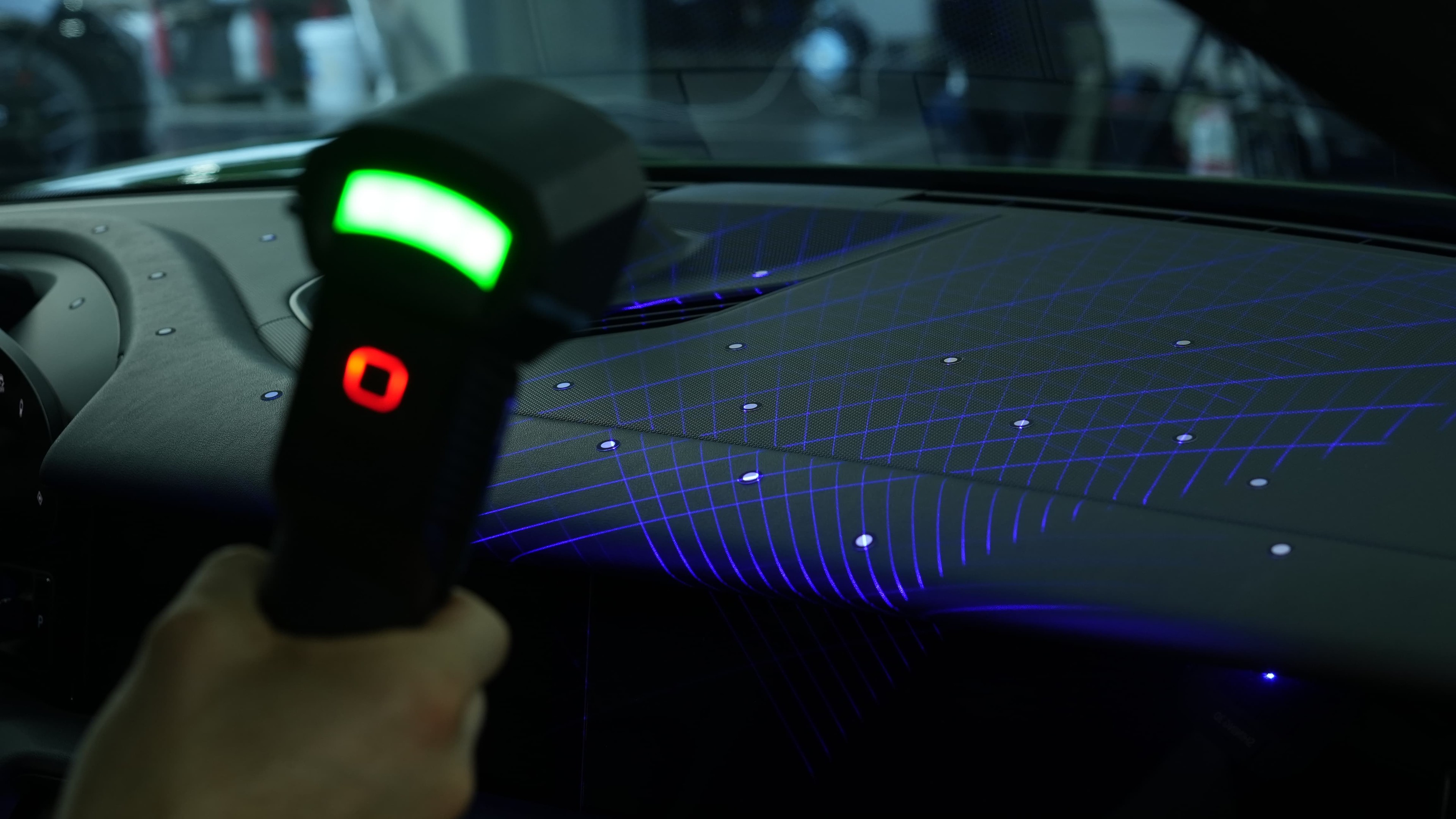
Logiciel guidé pour une utilisation simplifiée.
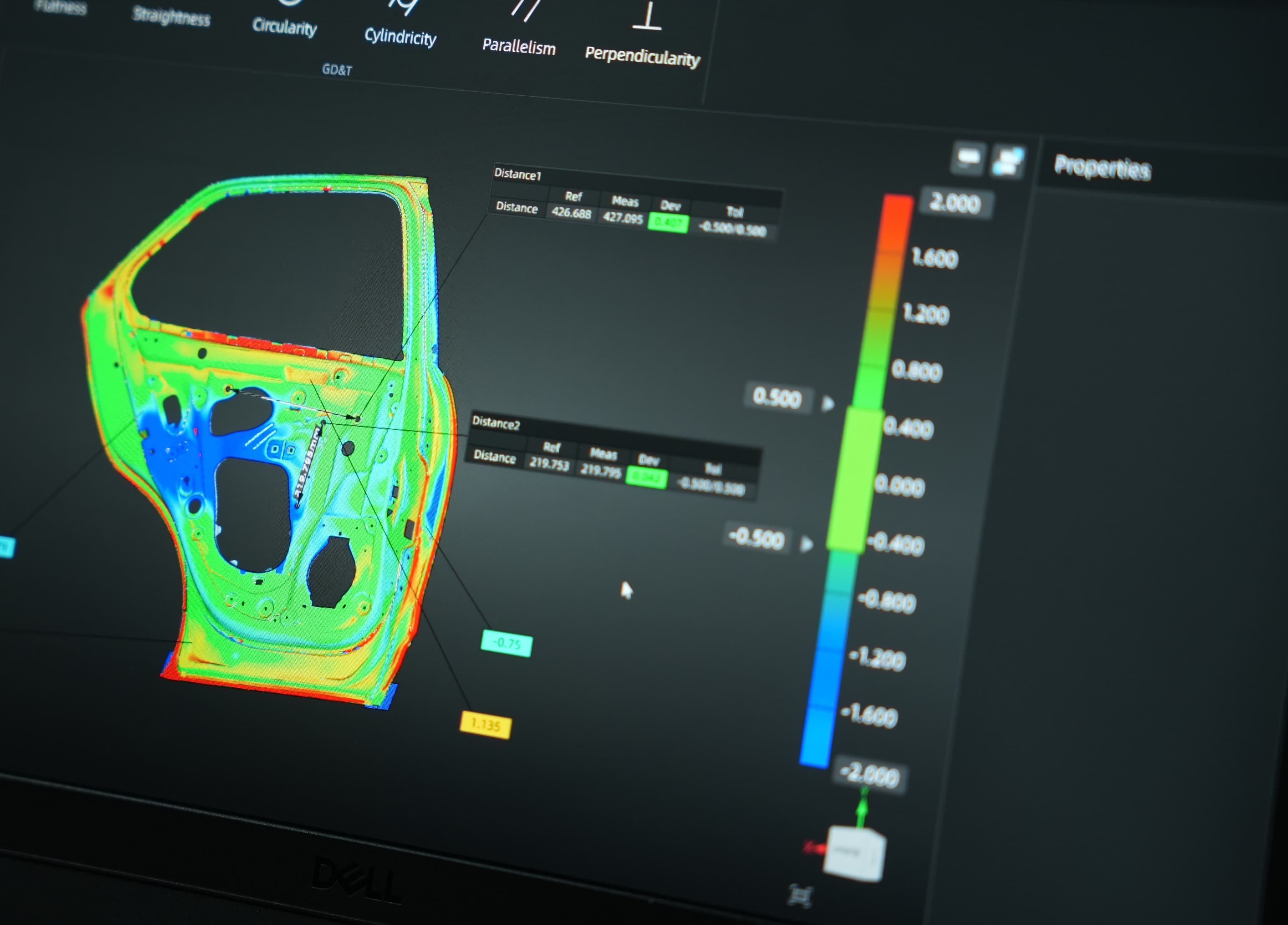
Le spectre de qualité démontre clairement l'exhaustivité de l'acquisition des données et l'intégration transparente avec les logiciels d'inspection et de conception 3D ultérieurs.
Vous avez des questions sur ce produit ?