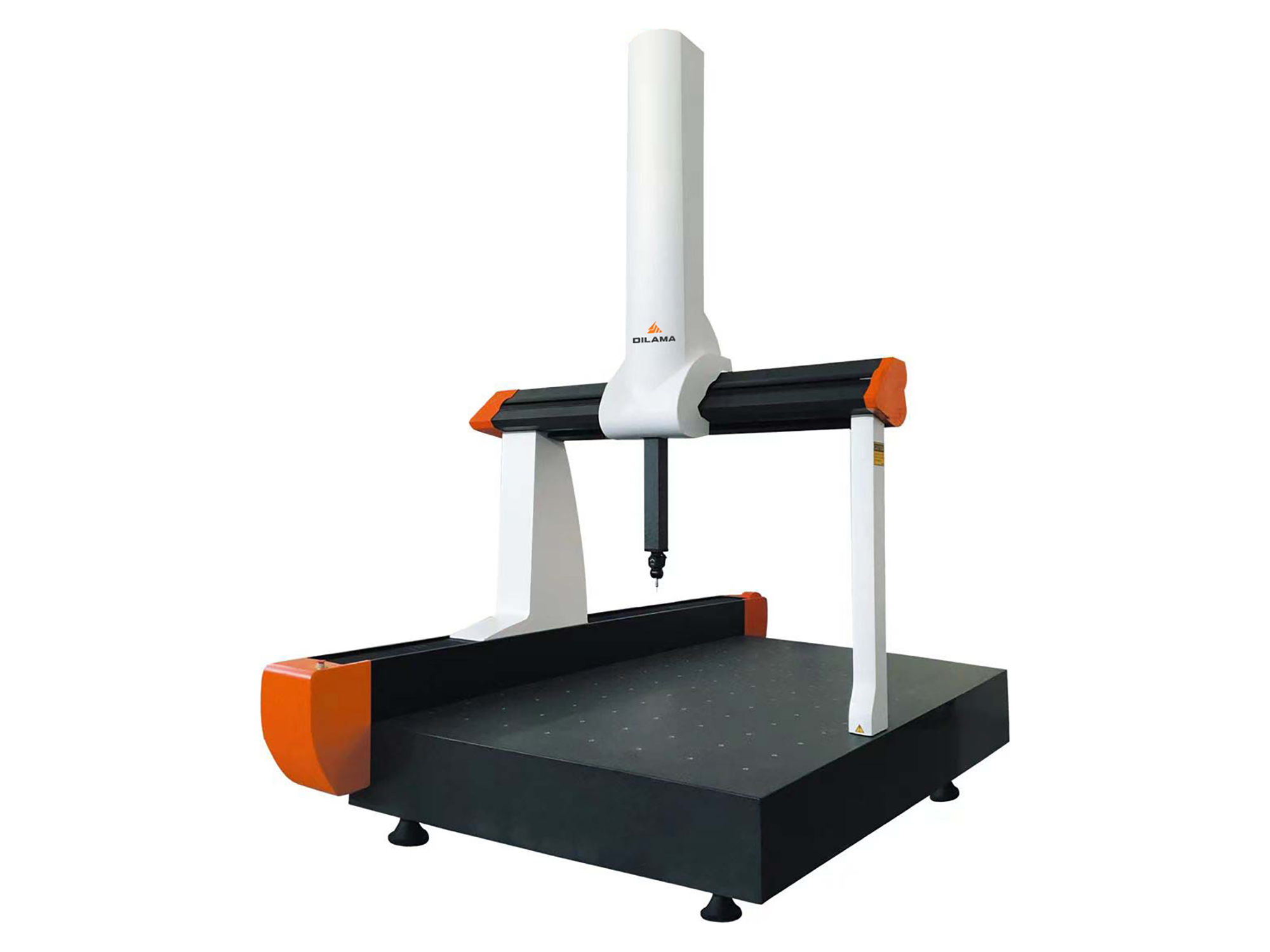
A coordinate measuring machine (CMM) is an advanced 3D measuring tool that trained technicians use. It accurately measures dimensions across three axes: X, Y, and Z. CMMs play a crucial role in manufacturing and quality control. They enhance measurement precision, reduce variability, and support early detection of deviations.
- CMMs provide unmatched measurement accuracy.
- They enable early detection and correction of deviations.
- CMMs support Statistical Process Control (SPC) by collecting data for trend analysis.
Key Takeaways
- CMMs provide high measurement accuracy across three axes, enhancing quality control in manufacturing.
- Automated CMMs reduce human error and increase efficiency, making them ideal for high-volume production.
- Regular calibration of CMMs is essential to maintain accuracy and ensure reliable measurements.
Components of a Coordinate Measuring Machine
Structure and Frame
The structure and frame of a coordinate measuring machine (CMM) provide the foundation for accurate measurements. Key components include:
| Component | Contribution to Measurement Accuracy |
| High-rigidity air bearing | Reduces friction and wear, enhancing smooth operation for accurate measurements. |
| Special air bearing design | Improves load capacity and stability, enhancing measurement repeatability. |
| Zero backlash friction drive | Increases positioning accuracy by avoiding backlash and reversal lag. |
| Fixed + micro-floating design | Buffers micro errors, improving axis parallelism and measurement consistency. |
| Temperature adaptation | Ensures stable operation within typical industrial temperatures, maintaining accuracy. |
Measurement Probe
The measurement probe is crucial for capturing data. Different types of probes serve various purposes:
-
Touch-trigger probes:
- Allow for precise measurements using a stylus.
- Emit a signal upon reaching the measurement point.
-
Displacement-measuring probes:
- Utilize sensors to measure dimensions while detecting fluctuations.
-
Proximity probes:
- Measure the distance to the surface without contact.
- Reduce the risk of damage to delicate surfaces.
-
Multi-sensor probes:
- Combine multiple measurement technologies in one probe.
- Adapt to various measurement tasks.
Control System
The control system ensures precise operation and data integrity. It features:
| Feature Description | Impact on Precision and Data Integrity |
| High-rigidity air bearing structure | Reduces friction and wear, enhancing smooth operation for accurate measurements. |
| Zero backlash friction drive system | Eliminates backlash and improves positioning accuracy, crucial for precise measurements. |
| Fixed + micro-floating structural design | Buffers micro errors, improving axis parallelism and measurement consistency. |
These components work together to enhance the overall performance of a coordinate measuring machine, ensuring you achieve the highest level of measurement accuracy.
Types of Coordinate Measuring Machines
Manual CMM
Manual coordinate measuring machines (CMMs) require human intervention for operation. You assemble these machines manually, making them suitable for smaller tasks. They excel in environments where quick installation is essential. Common applications include the automotive industry, aerospace, and medical devices. For instance, you can use manual CMMs to inspect engine components or measure turbine blades. However, they may not be portable and often require a dedicated metrology lab.
Automated CMM
Automated CMMs operate with minimal human involvement. These machines often deliver higher precision, making them ideal for high-volume production. They can handle complex measurements quickly and efficiently. While the initial cost may be higher, the investment pays off through increased accuracy and reduced labor costs. Automated CMMs are particularly beneficial in industries that demand consistent quality, such as precision machinery and mold manufacturing.
Optical CMM
Optical CMMs utilize non-contact measurement techniques, employing triangulation to gather data. This feature allows for portability and fast processing speeds. You can use optical CMMs in various applications, including quality control and reverse engineering. However, they may require specific setups before use. The extended measurement volume they offer makes them a valuable tool in many manufacturing environments.
| Type | Features | Advantages | Disadvantages |
| Manual | Requires manual assembly, less accurate for height measurements | Quick installation, environmentally friendly | Not portable, requires a metrology lab |
| Automated | Operates with minimal human intervention, often more accurate | High precision, suitable for high-volume production | Higher initial cost, may require programming |
| Optical | Portable, no contact needed, uses triangulation for measurements | Extended measurement volume, fast processing speed | May require application setup before use |
How a Coordinate Measuring Machine Works
Measurement Process
The measurement process of a coordinate measuring machine (CMM) involves several critical steps to ensure accuracy. First, you must control environmental conditions, such as temperature and humidity, to maintain measurement integrity. Next, stabilize the workpiece using fixtures to prevent movement during measurement. This setup ensures that you achieve reliable results.
Once the workpiece is secured, calibrate the probe and establish a workpiece coordinate system. This step is essential for accurate positioning. After calibration, select the measuring elements based on the specific features you want to measure. Finally, set safety parameters for automatic measurement to protect both the machine and the workpiece.
Data Collection and Analysis
During the data collection phase, probes gather dimensional data through either direct contact or contactless methods. The machine's structure and metrology software play crucial roles in this process. Calibration and environmental conditions significantly impact measurement accuracy.
The data collection process typically follows these steps:
- Probes gather dimensional data through direct contact or contactless methods.
- The machine's structure and metrology software facilitate data collection and analysis.
- Calibration and environmental conditions are essential for accurate measurements.
- The measurement process involves selecting measuring elements and using software for data analysis.
After collecting the data, you can analyze it using professional software. This software helps you visualize the results and identify any deviations from the desired specifications.
Software Integration
Software integration is vital for maximizing the capabilities of a coordinate measuring machine. Various types of software work together to enhance the measurement process. Here are some common software types:
| Type of Software | Description |
| Operational Software | Software required to operate the coordinate measuring machine (CMM). |
| Statistical Process Control (SPC) | Software that enables monitoring and analysis of measurement data and statistics. |
These software solutions allow you to collect, analyze, and display measurement data in real time. They also enable you to generate reports and track trends over time, which is essential for maintaining quality control in manufacturing environments.
By integrating advanced software with your CMM, you can streamline the measurement process and enhance overall efficiency.
Applications and Benefits of Coordinate Measuring Machines
Quality Control
Coordinate measuring machines (CMMs) play a vital role in quality control across various industries. They help you ensure that your products meet stringent design specifications. Here are some key benefits of using CMMs in quality control:
- CMMs accurately measure objects and complex workpieces, streamlining operational processes and reducing downtime.
- They perform crucial measurement functions faster and more precisely, automatically recording inspection results.
- CMMs help you inspect parts and components to ensure they meet design requirements, detecting minute flaws that could affect usability.
- They boost efficiency by reducing production time and waste while maintaining high accuracy.
- CMMs enhance quality assurance by eliminating human error through automated inspections.
- You can customize CMMs with specialized software programs to adapt to evolving manufacturing needs.
- By ensuring high-quality product delivery, CMMs improve brand reputation and customer satisfaction.
In fact, statistical evidence supports the effectiveness of CMMs in improving product quality. The following table summarizes key metrics:
| Metric | Improvement |
| First-pass yield | 18% |
| Warranty costs | 34% reduction |
| Customer satisfaction scores | Significant improvement |
| Inspection labor costs | 22% reduction |
Reverse Engineering
CMMs are essential tools in reverse engineering. They utilize sensitive electronic probes to measure discrete points on a solid part's geometry. These measurements serve two main purposes:
- Confirm compliance with specifications by comparing actual measurements against CAD files.
- Create a point cloud that outlines the part's shape.
This capability allows you to replicate existing parts accurately or improve upon them. Industries such as automotive, aerospace, and medical devices frequently rely on CMMs for reverse engineering tasks. By leveraging these machines, you can enhance your design processes and innovate more effectively.
Prototyping and Production
In prototyping and production, CMMs provide significant advantages. They allow you to verify the dimensions of prototypes before moving to full-scale production. This verification process helps you identify design flaws early, saving time and resources.
Using CMMs in production ensures that every component meets quality standards. You can implement real-time inspections, which minimize the risk of defects. This proactive approach leads to smoother production runs and higher overall efficiency.
Limitations of Coordinate Measuring Machines
Cost Considerations
Investing in coordinate measuring machines (CMMs) can be a significant financial commitment. The initial purchase price for advanced models often deters small and medium-sized enterprises (SMEs) from adopting this technology. High-quality CMMs can require substantial capital expenditure, which may not be justifiable for businesses with limited budgets. This financial barrier limits market penetration in critical segments of the manufacturing industry.
Skill Requirements
Operating CMMs necessitates advanced skills and extensive training. You need highly-trained metrology professionals to program and operate these machines effectively. Improper use can lead to significant damage and costly repairs. Therefore, many companies must employ full-time inspectors and invest in comprehensive training programs before allowing staff to operate CMMs. This requirement can strain resources, especially for smaller organizations.
Environmental Factors
Environmental conditions significantly impact the performance of CMMs. Here are some factors to consider:
- Temperature Stability: Even a 1°C fluctuation can cause a 1-meter steel part to expand by 12μm, leading to failed inspections. A stable 20°C (±1°C) is mandatory.
- Humidity Control: Maintain between 40%–60%. Levels above 65% risk rust and condensation, while levels below 40% cause static interference with electronic sensors.
- Vibrations: Nearby machinery or foot traffic can disrupt measurements, introducing errors.
- Stable Environment: Maintaining a stable environment is crucial for accurate CMM performance.
| Material | Coefficient of Thermal Expansion (CTE) | Expansion per 1°C (for 1 meter) |
| Steel | 11-13 micrometers per meter | 11-13 micrometers |
| Aluminum | 23 micrometers per meter | 23 micrometers |
By understanding these limitations, you can better prepare for the challenges associated with implementing CMM technology in your operations.
Coordinate measuring machines (CMMs) are vital in modern manufacturing. They enhance quality assurance and control by ensuring components meet design specifications. Here are key points highlighting their significance:
- CMMs improve accuracy and speed over manual inspections.
- They reduce human error during inspections.
- CMMs support increased throughput and just-in-time delivery.
As technology advances, CMMs become more efficient and accessible. Explore how these machines can elevate your manufacturing processes. Consider seeking professional advice to find the right CMM for your needs.
FAQ
What industries use coordinate measuring machines?
You will find CMMs in industries like automotive, aerospace, medical devices, and electronics, where precision measurement is crucial.
How often should I calibrate my CMM?
At least once a year (annually) according to ISO 10360 standards, or after any significant collision or relocation.
Can I use a CMM for non-metal materials?
Yes, CMMs can measure various materials, including plastics, ceramics, and composites, depending on the probe type used.