Chinese Automation Unit Achieves “Zero Errors”!!!
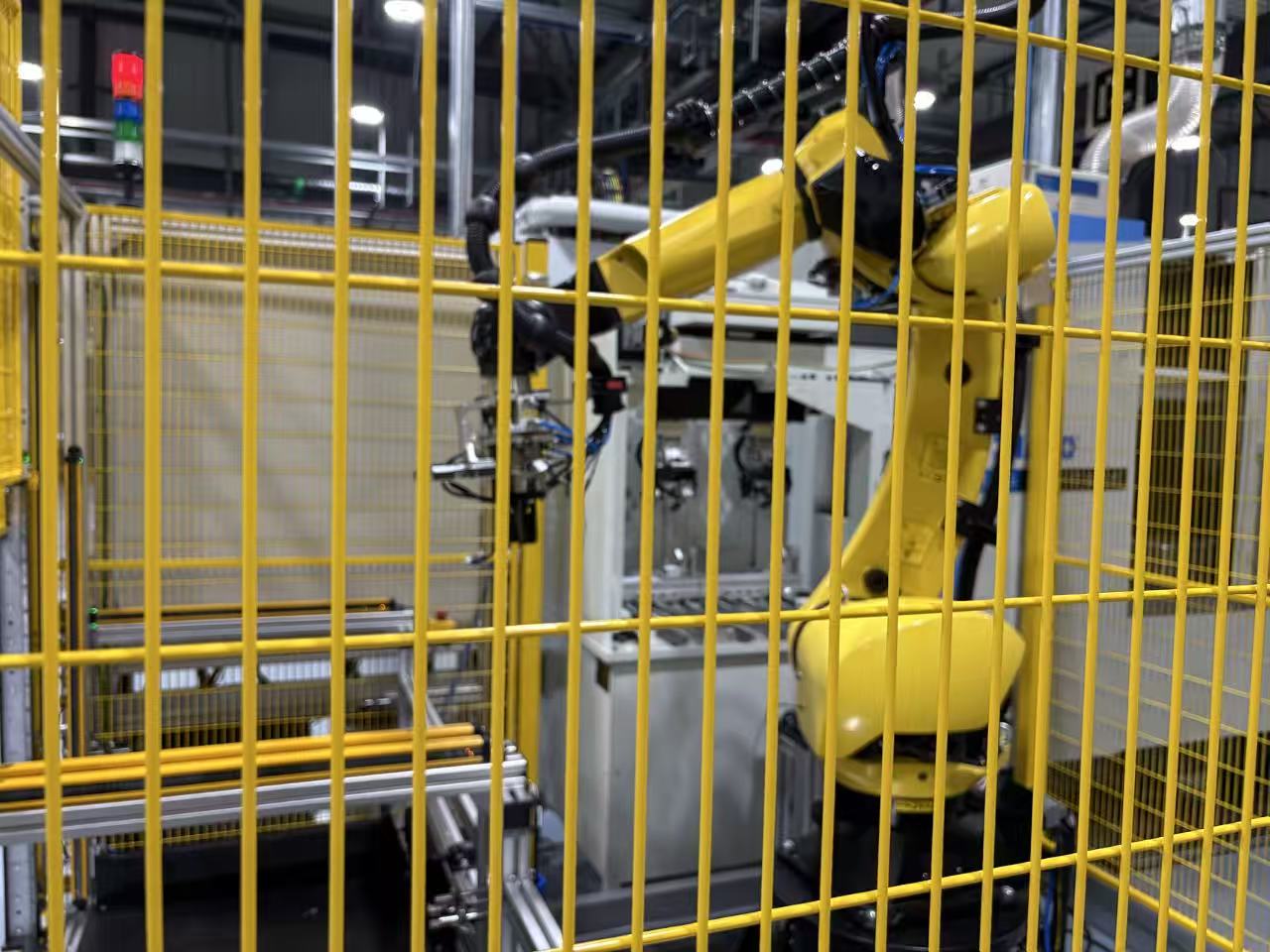
Factory Background: High-Precision Manufacturing Stalled at the “Final Step”
A precision machinery factory based in Munich, Germany, specializes in the production of high-precision transmission components, serving customers across multiple EU countries.
The workshop is equipped with four grinding machines, delivering high machining accuracy. However, in the post-processing stages of loading, unloading, and part sorting, the factory had long relied on manual operations, with two workers manually checking part numbers and performing sorting.
Core Pain Points: Manual Sorting Has Reached Its Limit
1. High Mispicking Rate Undermining Customer Trust
The factory produces more than 20 part models, many of which are similar in appearance and relatively heavy. During manual sorting, misreading part numbers was common, resulting in a misdelivery rate of approximately 10% per month.
Cross-border returns and replacements are costly, and frequent errors directly eroded customer confidence in delivery reliability.
2. High Labor Costs and Peak-Season Pressure
During peak order periods, sorting tasks become highly concentrated. Workers were frequently required to work overtime until 8:00 p.m., driving labor costs higher—yet still failing to guarantee zero errors.
3. Lack of Control and Traceability
The sorting process relied heavily on individual experience. Once an error occurred, it was difficult to identify where the issue originated, and the process lacked a data-driven management and traceability framework.
Solution: Chinese Automatic Machine Loading, Unloading, and Sorting Unit
To meet the customer’s core requirement of “eliminating misdelivery without major production line modifications,” we provided an automatic loading, unloading, and sorting unit for machine tools.
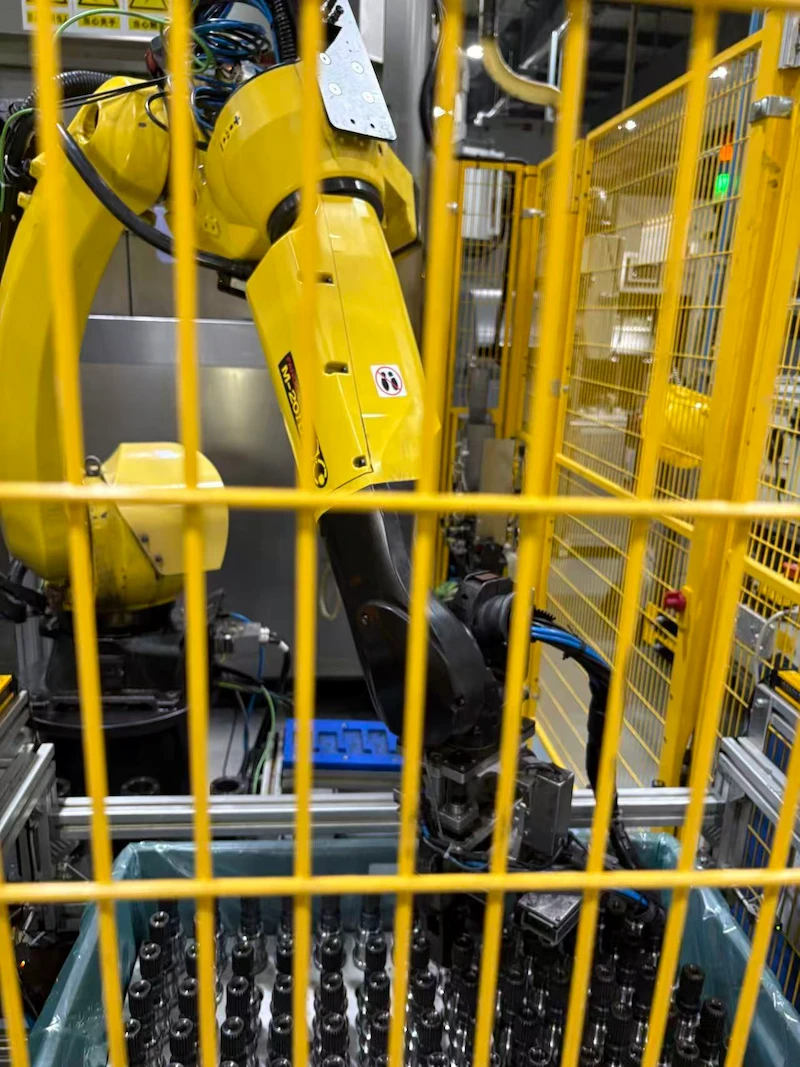
Key Components of the Solution
- Robotic automatic loading and unloading, seamlessly synchronized with the grinding machine cycle
- Vision sensors that automatically identify part model features, eliminating human recognition errors
- Robots that accurately sort parts into designated bins based on vision signals, enabling mixed-model production
- A software system that automatically records the processing and sorting path of each individual part, supporting full-process traceability
- The automation unit interfaces directly with existing grinding machines, requiring no modification to the machine body and enabling rapid deployment
Implementation Results
- Part misdelivery rate reduced from approximately 10% to 0, achieving true “zero errors”
- Sorting time per batch reduced from 2 hours to 20 minutes
- The original two sorting operators were reassigned to other value-added tasks
- Monthly labor cost savings of approximately €2,000
Customer Value Summary
By introducing the automated sorting unit, the factory successfully transitioned from experience-based manual sorting to system-driven, vision-based identification. Without increasing management complexity, the solution significantly improved delivery reliability and operational efficiency, providing a replicable automation upgrade path for manufacturers operating in high-cost European production environments.
Frequently Asked Questions
Q1: Does robotic automatic loading and unloading require a full line redesign?
No. In this case, the automation unit connected directly to existing grinding machines without modifying the machine structure.
Q2: Can vision-based sorting handle similar-looking parts reliably?
Yes. Vision sensors identify specific geometric or surface features that are difficult for human operators to distinguish consistently.
Q3: Is this solution suitable only for large-scale factories?
No. It is especially effective for small and medium-sized precision factories where mixed models and high labor costs create sorting risks.
Applying Robotic Automation in Precision Manufacturing
At Ningbo Dilama Machinery, we support manufacturers seeking practical automation upgrades that deliver measurable results without disrupting existing production layouts.
Our solutions focus on robotic automatic loading and unloading, inspection integration, and traceable workflows tailored to real manufacturing constraints.