A Worry-Free, Cost-Effective Full-Process Solution from China!!!
Project Background: Expansion Planned, but Stalled by “Hard to Understand, Hard to Decide”
An Indonesian cutting tool manufacturer planned to add new production lines for woodworking tools and small metal cutting tools, with a designed annual capacity of 500,000 pieces. The products primarily serve furniture manufacturing and machining companies across Southeast Asia.
Previously, the customer’s team traveled to China to attend machine tool and metrology equipment exhibitions. However, due to the large number of inspection equipment brands, complex technical parameters, and language barriers, the team was still unable to finalize a clear procurement list after three days of visits. Concerned that incorrect equipment selection could affect production line stability, the procurement plan was put on hold for nearly three months.
Core Pain Points: Not “Unwilling to Buy,” but “Afraid to Buy”
1. Difficulty in Equipment Selection
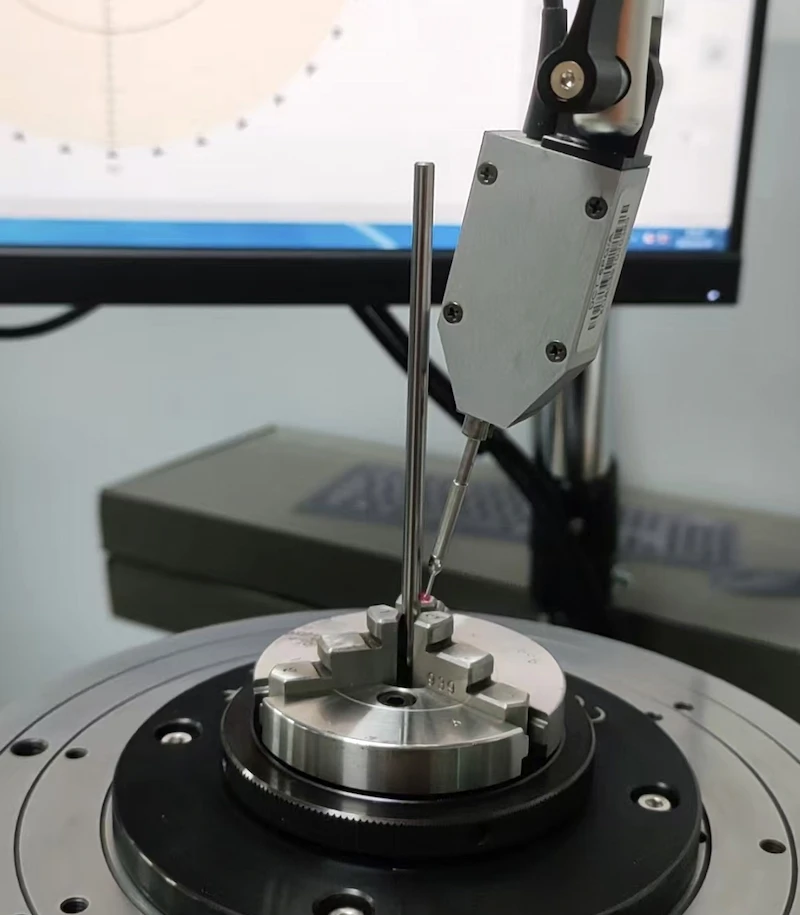
Cutting tool manufacturing involves multiple stages, including raw material inspection, semi-finished machining, and final product inspection. This requires various metrology instruments such as roundness testers and surface roughness testers. The customer lacked a systematic understanding of how process accuracy requirements correlate with equipment capabilities.
2. High Overall Procurement Cost
Engaging multiple brands separately weakened bargaining power. Logistics, installation, and training were fragmented across suppliers, resulting in time costs and elevated total procurement expenses.
3. Concerns About After-Sales Support
Cross-border transportation carries inherent risks. The customer was concerned about complex installation and commissioning, as well as slow overseas after-sales response, potentially delaying production ramp-up.
Solution: A Full-Process “Turnkey Package” Delivery from China
Instead of recommending equipment directly, we started from the manufacturing process itself. Our cutting tool process consultants worked closely with the customer to map out the key stages of raw material inspection – semi-finished machining – final acceptance, clearly defining critical accuracy requirements:
- Woodworking tool edge surface roughness: Ra 0.4 μm
- Metal cutting tool shank roundness tolerance: ≤ 0.002 mm
Based on these process and accuracy requirements, cost-effective inspection equipment was selected through reverse matching.
Implementation Path
- Process-first approach, clarifying inspection needs and accuracy boundaries
- Turnkey equipment selection, integrating four categories of top-tier Chinese metrology instruments, all ISO 9001 certified
- Unified negotiation, achieving approximately 18% equipment cost savings compared to decentralized procurement
- Pre-shipment remote video acceptance testing, reducing delivery risks
- Full responsibility for customs clearance, logistics, and insurance
- On-site installation and commissioning in Indonesia by two engineers upon equipment arrival
- One-week hands-on training, plus one year of free remote after-sales support
Project Results
- Procurement and commissioning cycle shortened from 4 months to 2.5 months, enabling production 50 days ahead of schedule
- First-month inspection pass rate for woodworking tools reached 98%, significantly exceeding the expected target of 92%
- The customer achieved clear improvements in cost control, efficiency, and product quality
Customer Value Summary
This solution not only resolved challenges related to equipment selection and delivery, but also enabled the customer to achieve rapid production launch and stable mass production without increasing management complexity. It established a solid foundation for future capacity expansion and long-term growth.
Frequently Asked Questions
Q1: Is cutting tool manufacturing selection mainly about choosing the cheapest equipment?
No. It is about matching process requirements to inspection capability. Cost optimization comes after technical suitability is confirmed.
Q2: Can a bundled, full-process approach really reduce risk?
Yes. Unified responsibility simplifies coordination, reduces interfaces, and shortens implementation time.
Q3: How critical is on-site support for overseas manufacturing projects?
Extremely critical. Local installation, commissioning, and training significantly reduce startup risk and accelerate stable production.
Applying This Approach to Tooling Manufacturing Projects
At Ningbo Dilama Machinery, we support cutting tool manufacturers through process-driven, full-scope manufacturing solutions—from selection and procurement to installation and long-term support.