Roundness Measuring Instrument— Core Equipment for Precision Geometric Tolerance Measurement
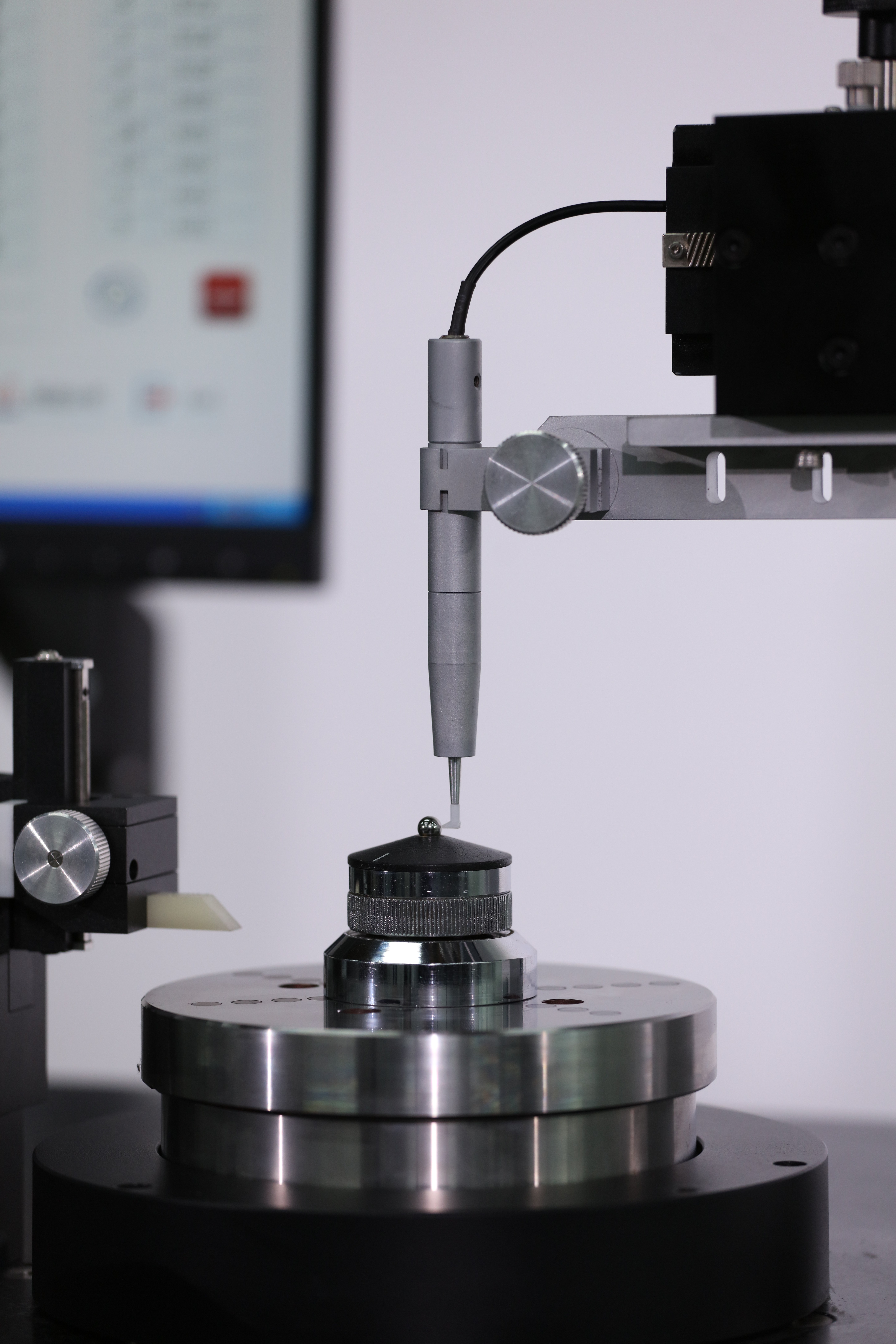
The roundness measuring instrument is a professional metrological instrument that employs the spindle rotation method to achieve high-precision measurement of workpiece roundness deviation. Capable of simultaneously inspecting multiple geometric tolerances, it uses a precision rotating spindle system as the reference, collects profile data via sensors, and evaluates errors through algorithms, providing accurate and reliable quality control support for precision manufacturing. It serves as a key instrument in the production and metrological verification of high-end equipment.
Featuring a high-precision air-bearing spindle as the measurement datum, the instrument operates on the radius measurement method (workpiece rotating type): the stylus contacts the workpiece surface and acquires real-time angular and displacement signals as the workpiece rotates. After software filtering and denoising, errors are automatically calculated, and inspection results and analysis reports are generated. Its core measurement accuracy reaches the sub-micron to nanometer level, representing a standard inspection solution in the industry.
The roundness measuring instrument can measure basic form and position errors, including roundness, cylindricity, concentricity, coaxiality, and circular runout, as well as precisely evaluate flatness, parallelism, perpendicularity, eccentricity, radial runout and face runout. The supporting software provides surface waviness analysis, spectrum analysis, and wave height analysis to identify machining defects. It supports various evaluation criteria such as the minimum zone method, least squares method, minimum circumscribed circle method, and maximum inscribed circle method, along with multi-stage filtering settings to meet diverse inspection requirements. It also enables automatic data storage via SQL database, data traceability, printing, and PDF export, and can effectively process abnormal data such as burrs and holes.
The instrument mainly consists of a column, sensor, spindle, worktable, and base, with a stable and reliable structure. It has a maximum measuring diameter of 500 mm, a maximum measuring height of 500 mm, and a maximum load capacity of 500 kg, covering inspection from small precision parts to large workpieces, and supports customized configurations.
With outstanding performance, roundness measuring instrument are widely used in automotive manufacturing, bearings, precision machine tools, aerospace, hydraulics and pneumatics, metrology and inspection institutions, etc. They are applied to the precision measurement and calibration of key components such as engine crankshafts, bearing inner and outer rings, machine tool spindles, turbine blades, and hydraulic valves, ensuring assembly accuracy, operational stability, and sealing performance, while improving product service life and overall quality.
As core equipment for precision geometric measurement, the roundness measuring instrument, with its high datum accuracy, comprehensive inspection capability, and stable reliability, has become an indispensable instrument for modern industry to achieve high-precision, standardized, and traceable quality control, supporting accuracy upgrading and quality improvement in high-end manufacturing.