A Singapore Precision Manufacturing Enterprise - Breaking Through Discrete Manufacturing Bottlenecks with Smart Manufacturing to Enhance Quality and Efficiency!!!
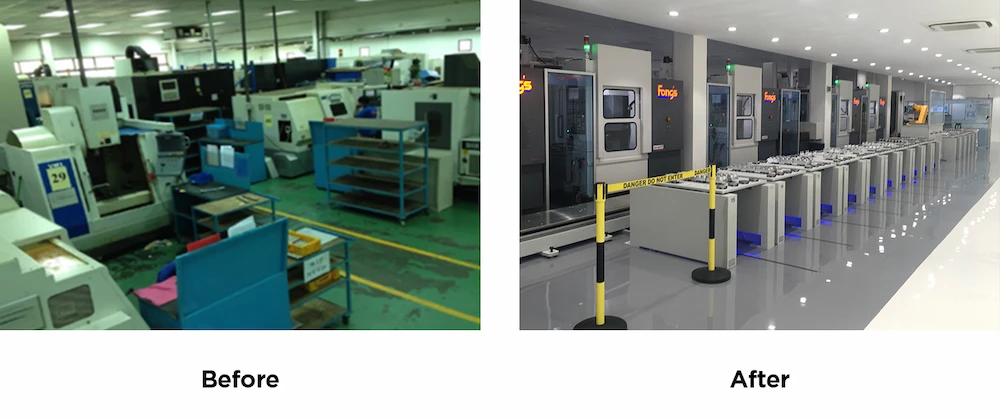
Industry Background: Dual Challenges of Efficiency and Quality in Discrete Manufacturing
A Singapore-based precision manufacturing enterprise specializing in medical endoscopes operates under a low-volume, high-mix, high-precision discrete manufacturing model. As global medical markets continue to raise requirements for product accuracy, delivery efficiency, and regulatory compliance, traditional manufacturing and quality management systems have increasingly revealed structural bottlenecks.
Challenges such as complex and time-consuming changeovers, frequent human errors, high labor costs, and insufficient order response speed have constrained the company's ability to scale and remain competitive, limiting its further development.
Breakthrough Strategy: Rebuilding the Production System Through Smart Manufacturing
To address these challenges, the enterprise introduced an SMT smart manufacturing production line, guided by the core philosophy of "data-driven operations and flexible adaptability."
This initiative enabled the construction of a fully integrated intelligent manufacturing system spanning production, quality, equipment, and decision-making processes, driving a transformation from experience-based manufacturing to data-driven manufacturing.
Core Solutions
1. MES + IIoT for End-to-End Data Closed Loop
By integrating an MES system with SmartBox data acquisition devices, the company achieved automatic equipment data collection, real-time monitoring, and full process traceability - effectively eliminating errors caused by manual data recording.
2. Flexible Manufacturing System (FMS)
Through the integration of robotic loading and unloading, automatic tool changing, and multi-machine collaboration, the system enables rapid changeovers and efficient adaptation to low-volume, high-mix production requirements.
3. AI-Driven Quality Control
By combining coordinate measuring machines (CMMs) with AI algorithms, machining data is analyzed in real time, enabling automatic error compensation, quality prediction, and continuous process optimization.
4. Digital Twin and Predictive Maintenance
A full equipment lifecycle model was established, leveraging vibration, temperature, and load monitoring to provide early fault warnings and significantly reduce unplanned downtime.
5. Data Middle Platform
Data from ERP, MES, and equipment layers is fully integrated, providing management with real-time, accurate, and actionable insights to support informed decision-making.
Transformation Outcomes
- Changeover time reduced by 70%, with order response speed increased by 50%
- Overall production efficiency improved by 40%, with OEE rising from 68% to 82%
- Product yield increased from 95% to 99.8%, enabling stable 24/7 continuous operation
Organizational and Industry Value
Frontline employees transitioned into higher value-added roles, while the company's innovation capabilities continued to strengthen. As a result, the enterprise became a core partner of leading global medical device manufacturers, establishing a strong competitive advantage in the field of medical precision manufacturing.
Frequently Asked Questions
Q1: Is this intelligent manufacturing method suitable for small-batch medical device production?
Yes. This case demonstrates that high-variety, low-batch production can greatly benefit from incorporating flexibility and data integration into system design.
Q2: Will AI-driven quality control replace traditional inspection?
No. It enhances traditional testing by identifying trends early and taking corrective measures before deviations widen.
Q3: How long does it typically take to see measurable results?
By implementing in phases, improvements in efficiency and quality can usually be seen within months, rather than years.
Apply these principles to your manufacturing projects
Ningbo Dilama Machinery Co., Ltd. supports manufacturers engaged in complex, high-precision production by integrating manufacturing systems, measurement solutions, and data-driven workflows into a practical and scalable architecture.